Personal experience — Pavel Rachkouski, founder. One person’s notes, not advice.
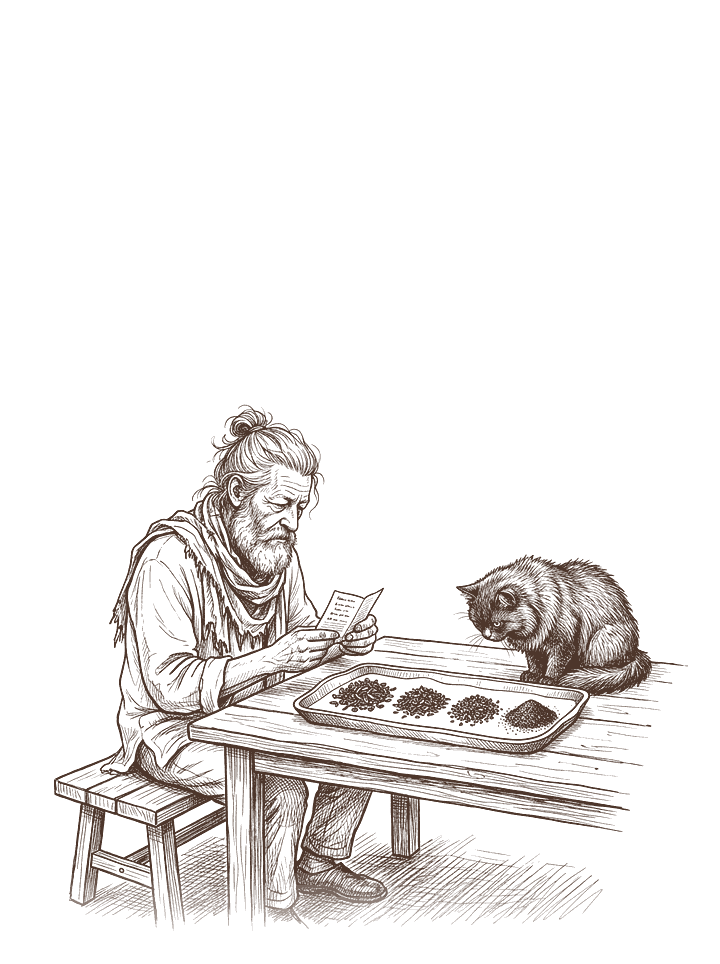
From Pavel’s tea table
Black tea usually isn’t my thing, but I do drink it sometimes. At home I have a Turkish black tea in a Hafiz Mustafa 1864 tin from Istanbul, and I brew it roughly the way I brew my ivan chai.
In Turkey I could put away about ten glasses with Turks; it’s fairly strong and has its own fun taste. In India, wherever I went, people drank masala: everywhere they boiled it, everywhere they added things to it. A fun tea, and I drank quite a lot of it there; in Dubai I tried it, and it was completely different. In Bangkok I ordered plain black tea, and it didn’t impress me at all. In Bangkok and then in Phuket I had to drink coffee everywhere, because I never came across normal tea.
If you overbrew a black tea, it grips your tongue, and the grip turns unpleasant. And I’m not a connoisseur who picks out notes and tells stories about the terrible tea I drank. An overdried leaf just tells me the quality is low: you drink it, the taste is the same, it’s just slightly overdried.
None of the words I can read on my own tin is a grade code (see the exercise below). What follows is the reference part: what the letters mean, from the trade bodies and Wikipedia.
Read the letters, not a score
Read the letters on a black-tea packet as a description to decode, rather than a score to maximise. A grading system may describe size, form, visible tips or expected appearance. It still leaves much of the eventual cup undescribed.
The Sri Lanka Tea Board explicitly distinguishes grading by particle size from quality in itself.[1] That is a useful starting point: decode the label, then decide whether the tea fits the cup you want.
Start with the broad family
The Indian Tea Association groups orthodox black-tea grades under whole leaf, broken, fannings and dust.[2] These are categories of finished material. They are not four rungs on a universal ladder of enjoyment.
“Whole leaf” should not make you assume that every piece is a pristine leaf exactly as picked. Equally, “broken” does not identify a damaged retail product: it can be the intended manufactured and sorted form. The word “dust” has a defined place in tea grading. Read it in that trade context, rather than as a statement about household dirt.
A small vocabulary that does useful work
For Indian orthodox tea, the association’s list gives these expansions:[2]
- OP: Orange Pekoe, in the whole-leaf group.
- FOP: Flowery Orange Pekoe, also in that group.
- BOP: Broken Orange Pekoe, in the broken group.
- FBOP: Flowery Broken Orange Pekoe, also broken.
- BOPF: Broken Orange Pekoe Fannings, in the fannings group.
Treat “Orange Pekoe” as grade language here. It is not a declaration that the tea contains orange or tastes of citrus. For added flavour, consult the ingredients and product description. There is no need to attach a speculative story about the name’s historical origin to make that practical distinction.
When the string gets longer
Packets can carry longer strings than the five above. Wikipedia’s whole-leaf table goes on past FOP with GFOP (Golden Flowery Orange Pekoe), TGFOP (Tippy Golden Flowery Orange Pekoe), FTGFOP (Finest Tippy Golden Flowery Orange Pekoe) and SFTGFOP (Special Finest Tippy Golden Flowery Orange Pekoe).[5] The same article glosses “tippy” as plenty of tips, and “golden flowery” as very young buds or tips, usually golden in colour, gathered early in the season.[5]
Do not read a letter on its own. F means Flowery in FOP,[2] Fannings in BOPF[2] and Finest at the start of FTGFOP.[5] In FBOPF, Wikipedia reads the first F as Finest and the last as Flowery, and notes that the last one is not Fannings, as you might expect.[5] A letter can change its meaning with its position, which is one more reason to ask what each letter denotes in this seller’s system. These expansions come from one general reference, so treat them as a starting point.
CTC is a method, with grades of its own
CTC describes a manufacturing approach, rather than a single particle size. India’s published CTC classification separately lists broken-leaf, fanning and dust grades. Examples include BOPL, Broken Orange Pekoe Large; BP, Broken Pekoe; PF, Pekoe Fannings; and PD, Pekoe Dust.[3] Assam, for example, produces both orthodox and CTC tea.
Notice that BOPF also appears in this CTC list.[3] The letters alone therefore do not establish orthodox manufacture. This is a good reason to read the entire product description rather than treating one familiar abbreviation as sufficient identification.
Ask: “Is this orthodox or CTC, and what does this grade mean for this tea?” That keeps the production method and grade in their proper places. Asking whether CTC is lower than BOP mixes two different kinds of description.
Read each region on its own terms
Sri Lanka’s product specification provides detailed descriptions beyond a simple size ladder. OP1 is described through its long, wiry, twisted appearance; OP is less wiry. BOPF is smaller than BOP, while D1 is smaller again. Separate CTC descriptions include granular BP1 and PF1.[4]
These examples show why a number is not a portable mark out of ten. An OP1 description belongs to its stated framework; it does not establish that every tea bearing a “1” outranks every tea without one. The same caution applies when moving between countries or comparing a merchant’s house terminology with a national specification.
A five-minute packet-reading exercise
Take one packet or online listing and make four short entries:
- Identity: copy the producer, region and harvest information actually supplied. Leave missing details blank.
- Manufacture: record orthodox, CTC or unspecified. Do not infer it from the packaging.
- Grade: copy the code exactly, including spaces, suffixes and numbers. Find the explanation used for that origin or ask the seller.
- Purpose: write how you intend to drink it: plain, with milk, quickly at breakfast, or in a more attentive tasting.
Now separate a buying question from a brewing question. “What does this suffix mean?” is for the seller. “Would I prefer a gentler infusion?” is something you can investigate with the tea itself. Begin with directions for that particular sample, record your quantities and time, and change one variable on the next attempt. A grade code alone cannot supply a complete recipe.
The exercise on a real tin
Try the four entries on my Turkish black tea tin, shown in my photo on the black tea page. The words on the front include “Traditional”, “Hafiz Mustafa 1864”, “İstanbul”, “Black Tea” and, in Turkish, “Siyah Çay”, which also means black tea. They give a name, a city and the type of tea. None of them states a harvest, a manufacturing method or a grade code such as OP or BOP, and one small line above “Siyah Çay” cannot be made out in the photo. So Identity is only partly filled, Manufacture stays “unspecified” and Grade stays blank, as the exercise says to do when information is missing. Purpose is the one entry I can fill: I brew it roughly the way I brew my ivan chai.
Frequently asked questions
What does BOP stand for in tea?
Broken Orange Pekoe. In the Indian Tea Association’s orthodox list it sits in the broken group, next to FBOP, Flowery Broken Orange Pekoe.[2] The letters describe the size and form of the finished leaf; they do not name a flavour.
Does orange pekoe taste of orange?
No. “Orange” belongs to the grade name, not to the flavour. Wikipedia says the word is sometimes mistaken to mean that the tea is flavoured with orange, and that the fruit is unrelated to the tea and to its taste. It gives two possible explanations of the name and calls neither definitive.[5] If a tea is flavoured, the ingredients list says so.
Is OP a better grade than BOP?
Not on the letters alone. The Indian Tea Association puts OP in the whole-leaf group and BOP in the broken group,[2] and the Sri Lanka Tea Board treats grading by particle size as separate from quality itself.[1] Wikipedia, a general reference, puts the whole-leaf grades at the top and fannings and dust at the bottom for Western and South Asian teas,[5] so the references do not put it the same way. Read the seller’s description of the actual tea.
What do TGFOP and FTGFOP mean?
Tippy Golden Flowery Orange Pekoe and Finest Tippy Golden Flowery Orange Pekoe, in Wikipedia’s whole-leaf table.[5] Its glosses read “tippy” as plenty of tips and “golden flowery” as very young buds or tips, and the first F in FTGFOP is “Finest”.[5] These strings come from one system, so ask the seller what they mean for this tea.
Is dust tea dirty?
No. In grading, dust is a group of the smallest particles: the Indian Tea Association’s CTC list includes PD, Pekoe Dust,[3] and Wikipedia’s dust table lists D1, PD and PD1.[5] The word names a size, not dirt. For a batch that really did arrive as crumbs, see my shu pu-erh notes; that was a pu-erh, not a graded black tea.
Are tea bags made from fannings or dust?
Wikipedia says most tea bags typically use fannings, though some companies sell bags filled with whole leaf.[5] It lists fannings and dust as separate groups.[5] To know what is in a particular bag, read its description or ask the maker.
Does the grade change how I brew?
Size can. Wikipedia says larger leaves or pieces generally need a longer steeping time, that, measured by volume, bigger pieces take more tea for the same strength, and that fannings, being small, are typically brewed in an infuser.[5] That is a direction, not a recipe. Start from the directions for your sample, as the exercise above says, and change one thing at a time. For a method you can repeat, see Brew a cup of tea you can repeat.
About these sources
Anyone can edit Wikipedia, so its Tea leaf grading article (revision of 8 November 2026) is treated as a general reference, not a trade standard, and is used here only for the longer letter strings, the dust grades, tea bags, brewing and the name “Orange Pekoe”. Where it puts something differently from the Indian Tea Association or the Sri Lanka Tea Board, both are shown.
Read next: Black tea: a process with many possible cups · Assam and Darjeeling: read the place, then read the tea · Brew a cup of tea you can repeat
Sources
[1] Sri Lanka Tea Board, Manufacturing, grading section.
[2] Indian Tea Association, Orthodox tea grades.
[3] Indian Tea Association, Standardisation of grades of CTC teas, presenting Tea Board classifications effective from 1 March 2011.
[4] Sri Lanka Tea Board, Ceylon tea product specification, section 3.1.2.
[5] Wikipedia, Tea leaf grading, revision of 8 November 2026; a general reference that anyone can edit.