Everyday cooking
Tomato & Red Lentil Soup
Originally published · 16 October 2026
Jump to ingredients ↓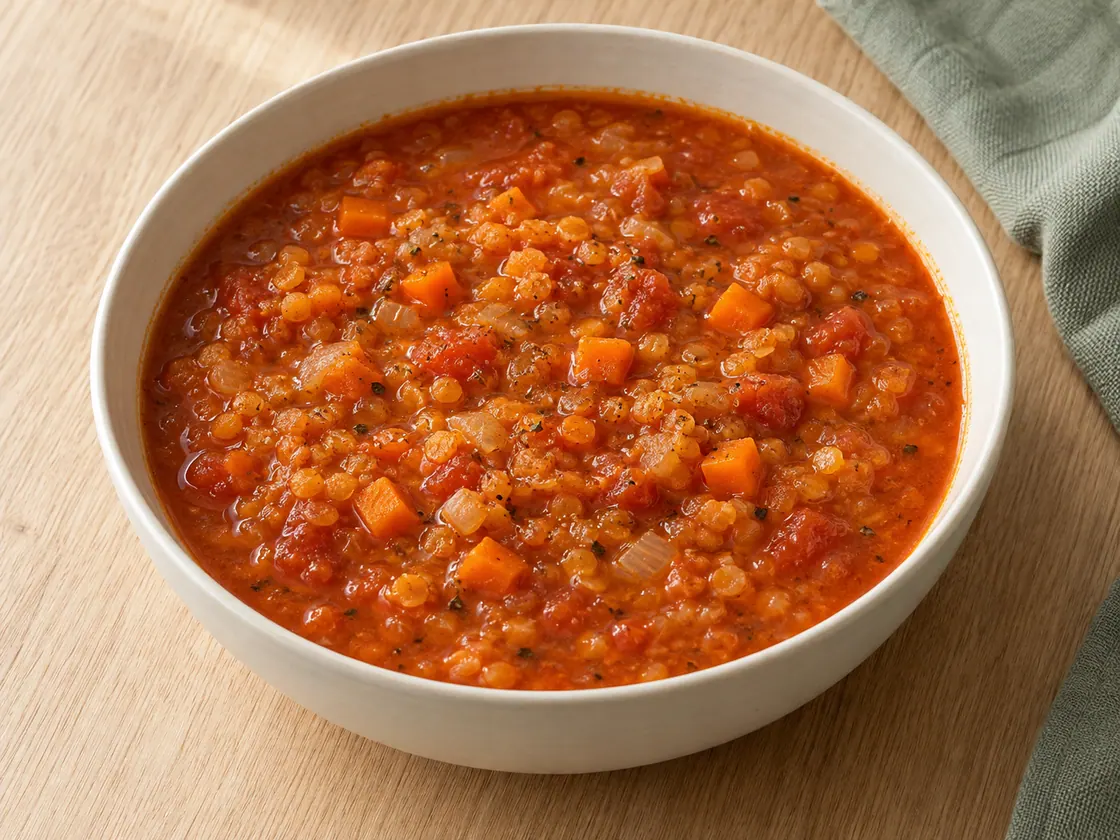
Start this one-pot soup with onion, carrot and split red lentils. Let the lentils soften before adding the canned tomatoes, giving you a clear point to check their texture. There is no blender step: stir for a more broken-down texture or leave the soup chunkier.
Soften onion and carrot in olive oil, add garlic, paprika, 180 g rinsed split red lentils and 1 litre of water, and simmer about 15–20 minutes until the lentils start to break apart. Then stir in a 400 g can of chopped tomatoes and simmer 10–15 minutes more. It makes about four bowls in 45–60 minutes, with no blender or stock.
Recipe at a glance
- Approximate servings: 4 bowls, divided to suit your appetite
- Preparation estimate: 10–15 minutes
- Cooking estimate: 35–45 minutes
- Total estimate: 45–60 minutes
- Equipment: scales, measuring jug, sieve, knife, chopping board, 3-litre saucepan with lid, spoon and ladle; shallow covered containers and a food thermometer for leftovers
Ingredients
- 1 tablespoon olive oil, approximately 15 ml
- 120 g onion, peeled and finely chopped
- 150 g carrot, trimmed and cut into approximately 5 mm dice
- 2 garlic cloves, approximately 6 g, peeled and finely chopped
- 1 teaspoon ground sweet paprika
- 180 g dried split red lentils
- 1 litre water, plus 100–200 ml if needed
- 1 can chopped tomatoes, 400 g including the juice
- ½ teaspoon dried oregano
- ¼ teaspoon ground black pepper
- Up to ½ teaspoon fine salt, optional, added at the end
Use split red lentils for the formula below. Check the soup’s thickness before adding any of the extra water, rather than pouring it all in at the start.
Method
- Prepare the ingredients. Wash your hands and use clean equipment. Rinse the carrot under running water before trimming or peeling. Check the dry lentils for small stones or debris, then rinse them in the sieve. Clean the tomato can’s lid before opening. FDA food-handling guidance
- Soften the vegetables. Heat the oil in the saucepan over medium heat. Add the onion and carrot. Cook for about 7–9 minutes, stirring, until the onion has softened. If the pan catches, add a tablespoon of the measured water and lower the heat.
- Add the lentils. Stir in the garlic and paprika for about 30 seconds. Add the lentils and the remaining measured litre of water. Bring to a boil, then lower to a steady gentle simmer with the lid partly covering the pan.
- Check for softness. Simmer for about 15–20 minutes, stirring occasionally and scraping the base. Continue until the lentils have softened and are beginning to break apart, with no hard centre when pressed between a spoon and the side of the pan. Follow any longer minimum cooking instruction on the lentil packet. Add a little of the extra water if the mixture starts to stick.
- Finish the soup. Stir in the tomatoes with all their juice, oregano and pepper. Return to a simmer and cook uncovered for another 10–15 minutes, until the carrot is tender and the soup is evenly hot. Stir regularly. Add the remaining extra water in small amounts if you prefer a looser soup, then return it to a simmer. Taste and add the optional salt gradually.
- Serve what you need now and put the remainder away promptly using the guidance below. Dividing the batch into four bowls is a practical way to share it, not a prescribed portion size.
Cooling, storage and reheating
Divide leftovers into shallow covered containers and refrigerate promptly, within two hours, or one hour above 90°F/32°C. Do not leave the whole pot on the counter to become cold. Keep the refrigerator at 40°F/4°C or below. FoodSafety.gov cooling guidance
Use refrigerated soup within 3–4 days. For the next meal, heat only the portion you need in a saucepan, stirring and adding a splash of water if thick. Bring it to a rolling boil and check that it reaches 165°F/74°C throughout. FoodSafety.gov storage chart and leftover reheating guidance
Allergens and labels
Check the lentil, tomato and seasoning labels. Other foods beyond legally listed major allergens can cause reactions. If you replace the water with stock, check that product’s ingredients and allergen information as well; it changes this recipe’s ingredients and seasoning. No allergy-free claim is made. FDA allergy guidance
Put it in your meal plan
Plan where the remaining soup will fit before putting it away. It can serve today’s lunch and another refrigerated meal within the storage window; label the container with the cooking date.
Keep this recipe in your own meal plan, with its quantities beside your shopping list. Build My Meals offers its own preset meal ideas; it does not import this recipe or add it as a custom meal.
From Pavel’s experience
Personal experience — Pavel Rachkouski, founder. One person’s notes, not advice.
I really like borscht — it’s from my childhood, one of my favourites, and my girlfriend makes it very well too. And pea soup: as a kid I hated it, and now I love it.
Frequently asked questions
Why add the tomatoes after the lentils?
Letting the lentils soften first gives you a clear point to check their texture: they should be breaking apart, with no hard centre when pressed against the side of the pan.
Do I need to soak red lentils?
This recipe rinses the dry lentils in a sieve and has no soaking step. Follow any longer minimum cooking instruction on the lentil packet.
Do I need a blender?
No. There is no blender step: stir well for a more broken-down texture, or leave the soup chunkier.
How long does lentil soup keep in the fridge?
Refrigerate in shallow covered containers within two hours (one hour above 90°F) and use within 3–4 days. Reheat only the portion you need to a rolling boil and check that it reaches 165°F/74°C throughout.
Sources and recipe notes
Published method comparison: Red lentil, chickpea & chilli soup (Good Food). Our soup uses more lentils and water, adds carrot, omits chickpeas and blending, and adds tomatoes after softening the lentils. This is a chosen method; no measured finished volume is claimed. The instructions here are our own version; source ratings, nutrition values and timing claims do not describe it. Safety links support the handling advice. Times and servings are approximate; packet instructions and cooking endpoints take priority.