Everyday cooking
Chickpea, Cucumber & Carrot Wraps
Originally published · 16 October 2026
Jump to ingredients ↓For a chickpea salad wrap without cooking, mash 240 g drained, rinsed canned chickpeas with lemon juice and olive oil, then fold in 100 g diced cucumber and 80 g grated carrot. Divide the filling between 2 large wraps labeled ready to eat and roll them: 15–20 minutes of preparation, no hob or microwave. Plan to eat them the same day and keep them at 40°F/4°C or below until needed. Ordinary wheat wraps contain wheat and may also contain milk, soy or sesame; read the full labels of the wraps, chickpeas and seasonings.
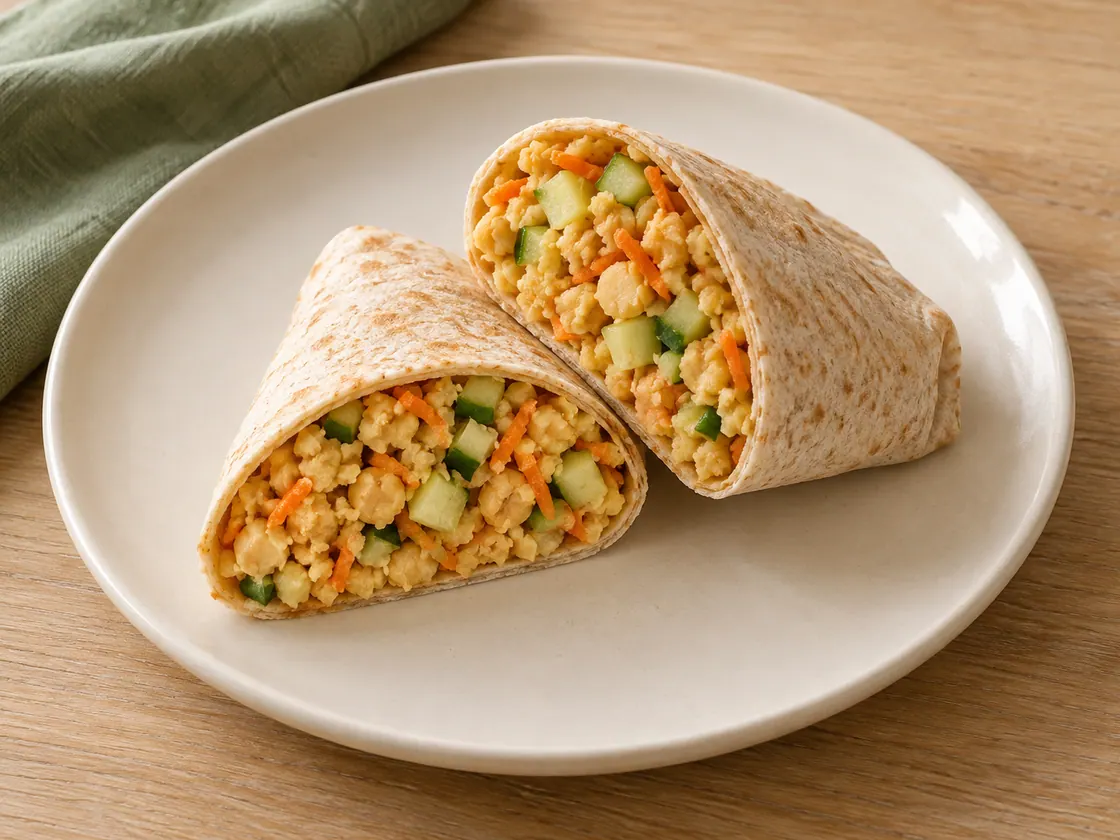
Mash canned chickpeas with lemon and oil to make a filling that holds the chopped cucumber and grated carrot. With wraps labelled ready to eat, the meal needs assembly rather than a hob or microwave. Mix the dressing into the chickpeas before filling the wraps.
Recipe at a glance
- Approximate servings: 2 large filled wraps, serving 2
- Preparation estimate: 15–20 minutes
- Cooking: none, provided the selected wraps are ready to eat
- Equipment: can opener if needed, sieve, mixing bowl, fork, grater, knife, chopping board and spoon; a covered container and insulated lunch bag with cold packs if taking lunch out
Ingredients
- 240 g canned chickpeas, drained and rinsed; usually one 400 g can, but check the drained weight
- 100 g cucumber, ends trimmed
- 80 g carrot, trimmed and peeled if preferred
- 1 tablespoon lemon juice, approximately 15 ml
- 2 teaspoons olive oil, approximately 10 ml
- ¼ teaspoon ground cumin, optional
- ⅛ teaspoon fine salt, optional
- ⅛ teaspoon ground black pepper
- 1–2 teaspoons drinking water, only if needed to loosen the mash
- 2 large soft wheat wraps, approximately 25 cm across and labeled ready to eat
Check two sizes before assembling: the chickpeas’ drained weight and the wraps’ capacity. Weigh the drained chickpeas rather than using the can’s total weight. If the wraps are smaller, serve extra filling alongside instead of forcing them closed.
Method
- Prepare a clean workspace. Wash your hands and clean the work surface and utensils. Rinse the cucumber and carrot under running water before cutting; if using a fresh lemon, rinse it too; scrub the cucumber with a clean produce brush. Clean the can lid before opening. FDA produce guidance and FDA food-handling guidance
- Make the base in a bowl with the drained, rinsed chickpeas, lemon juice, oil, pepper and optional cumin and salt. Mash firmly with a fork, leaving a few small pieces. If it will not spread, add drinking water one teaspoon at a time; stop when the filling holds together on the fork rather than running off.
- Prepare the vegetables. Cut the cucumber into small dice, approximately 5 mm. If its centre is very watery, scrape out the loose seeds with a spoon before dicing. Coarsely grate the carrot. Fold both vegetables through the chickpea mash.
- Fill the wraps. Lay each wrap flat. Divide the filling between them, placing it in a short strip just below the centre. Leave approximately 4 cm clear around the sides. Fold in the left and right sides, lift the bottom edge over the filling, then roll away from you while holding the sides in. Place seam-side down. Cut in half only if that makes it easier to eat or fit in the container.
- Serve or refrigerate. Eat promptly, or cover and refrigerate the wraps immediately. They do not need reheating.
Keeping lunch cold
For this recipe, plan to prepare and eat the wraps on the same day. Keep them at 40°F/4°C or below until needed. For travel, pack them already chilled in an insulated lunch bag with at least two frozen cold sources, one above and one below the food. Keep them cold until eating. USDA lunch-packing guidance
Do not leave the wraps unrefrigerated for more than two hours, or one hour above 90°F/32°C. Discard food that exceeds those limits. Lemon juice is included for flavour; this recipe does not use it as a preservation method. FoodSafety.gov time and temperature guidance
Allergens and labels
Ordinary wheat wraps contain wheat and may also contain milk, soy or sesame. Read the full labels of wraps, chickpeas and seasonings every time you buy them. Allergy advice varies by product; the absence of a “may contain” statement is not an assurance against cross-contact. FDA label guidance
Put it in your meal plan
Use this option when you can keep lunch cold but will not have reheating equipment. Check wrap size and the can’s drained weight before making the shopping list, so the amounts match the filling you plan to assemble.
Keep this recipe in your own meal plan, with its quantities beside your shopping list. Build My Meals offers its own preset meal ideas; it does not import this recipe or add it as a custom meal.
Frequently asked questions
How do you make a chickpea salad wrap?
Wash your hands, clean the work surface and utensils, and rinse the cucumber and carrot under running water before cutting. Mash the drained, rinsed chickpeas with lemon juice, olive oil, pepper and optional cumin and salt, leaving a few small pieces. Fold in the diced cucumber (about 5 mm) and coarsely grated carrot. Put the filling in a short strip just below the centre of each wrap, fold in the sides, lift the bottom edge over the filling and roll, then place the wrap seam-side down.
Do chickpea wraps need cooking or reheating?
No cooking is needed, provided the wraps are labeled ready to eat, and the wraps do not need reheating. Check the wraps’ size and the chickpeas’ drained weight before assembling; if the wraps are smaller, serve extra filling alongside.
Can I pack chickpea wraps for lunch?
Plan to prepare and eat them on the same day. Keep them at 40°F/4°C or below; for travel, pack them already chilled in an insulated lunch bag with at least two frozen cold sources, one above and one below the food. Do not leave the wraps unrefrigerated for more than two hours, or one hour above 90°F/32°C, and discard food that exceeds those limits.
Does the lemon juice keep the wraps fresh?
The lemon juice is there for flavor. The recipe does not use it as a preservation method, so the cold-keeping and time limits still apply.
Do the chickpea wraps contain allergens?
Ordinary wheat wraps contain wheat and may also contain milk, soy or sesame. Read the full labels of the wraps, chickpeas and seasonings every time you buy them; the absence of a “may contain” statement is not an assurance against cross-contact.
Sources and recipe notes
Published method comparison: Mediterranean Chickpea Salad Wraps (HelloFresh). Our filling uses carrot, lemon and olive oil instead of the source dressing and additional vegetables. Wrap capacity varies; serve surplus alongside. The instructions here are our own version; source ratings, nutrition values and timing claims do not describe it. Safety links support the handling advice. Times and servings are approximate; packet instructions and cooking endpoints take priority.