Everyday cooking
Chicken, Potato & Carrot Tray Bake
Originally published · 16 October 2026
Jump to ingredients ↓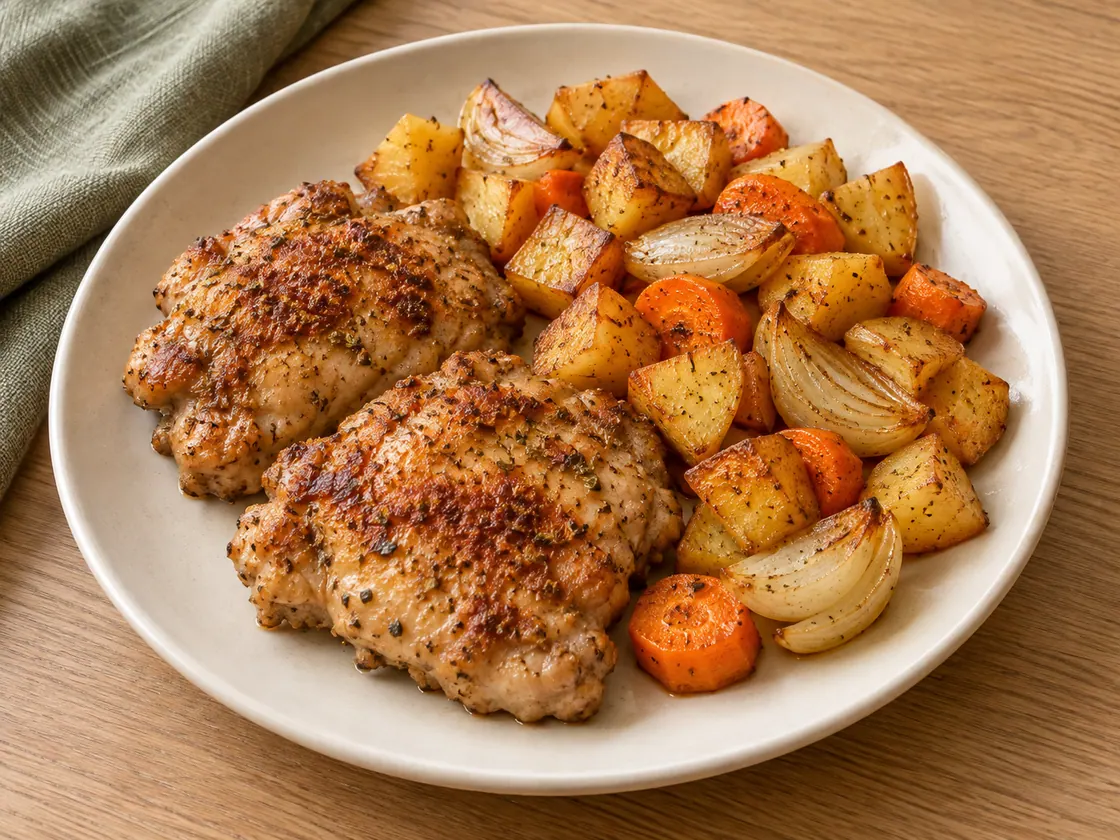
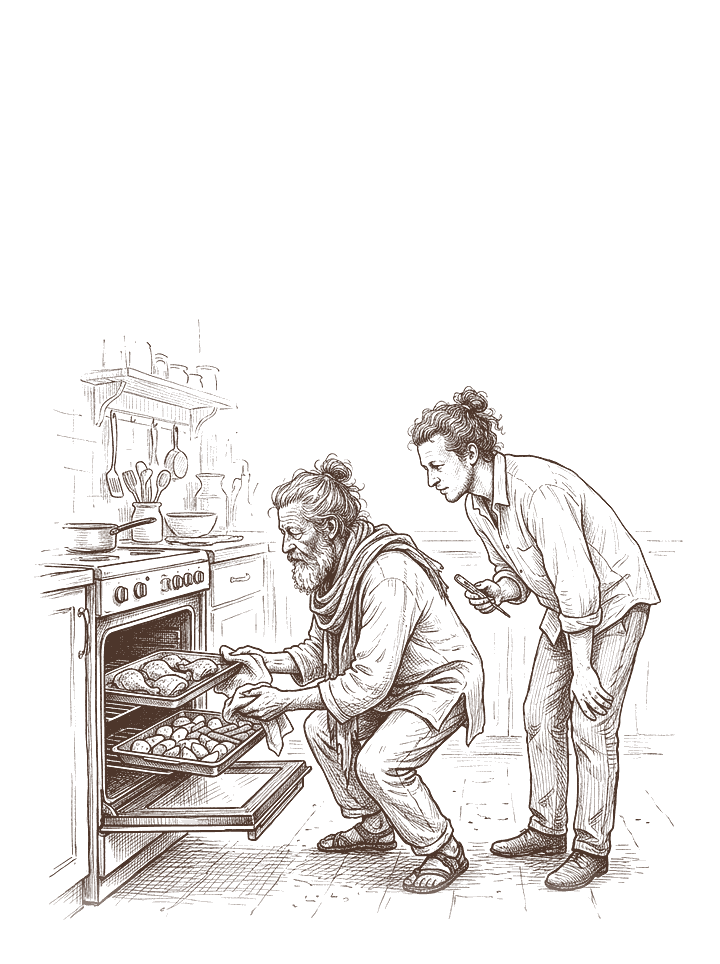
Use two rimmed trays for this meal: vegetables go in first, then boneless chicken thighs on a separate tray in the same oven. Keeping the trays separate keeps raw chicken juices away from the vegetables. Let the thermometer, not browning, decide when the chicken is ready.
Roast cubed potatoes, carrots and onion at 400°F/200°C (180°C fan) for about 20 minutes, then add boneless, skinless chicken thighs on a separate tray in the same oven and roast roughly 20–35 minutes more. The chicken is done only when the thickest part of every thigh reads at least 165°F/74°C on a food thermometer — not when it looks browned.
Recipe at a glance
- Approximate servings: 2 servings, each with 2 thighs and half the vegetables
- Preparation estimate: 15–20 minutes
- Oven estimate: 40–55 minutes, plus any additional cooking needed to reach the temperature endpoint
- Oven setting: 200°C/400°F conventional, or 180°C fan
- Equipment: scales, knife, produce chopping board, mixing bowl, two rimmed metal roasting trays, approximately 40 × 30 cm for vegetables and 30 × 20 cm for chicken, oven gloves, raw-chicken tongs, clean serving utensils and a clean instant-read food thermometer suitable for thin foods
Ingredients
- 400 g potatoes, scrubbed and cut into approximately 2 cm cubes
- 250 g carrots, scrubbed, trimmed and cut into approximately 1 cm thick pieces
- 120 g onion, peeled and cut into approximately 2 cm wedges
- 2 tablespoons olive oil, approximately 30 ml, divided
- 1 teaspoon dried oregano, divided
- 1 teaspoon sweet paprika, divided
- ½ teaspoon fine salt, optional, divided
- ¼ teaspoon ground black pepper, divided
- 4 plain boneless, skinless chicken thighs, approximately 150 g each and 600 g in total, fresh or fully thawed in the refrigerator
Choose similar-sized boneless thighs for the method below and keep them refrigerated until needed. A different cut or frozen pieces require different instructions; they are not a simple swap within the stated timing.
Method
- Prepare the oven and vegetables. Heat the oven to the stated setting. Wash your hands and rinse the potatoes and carrots under running water before cutting. Toss the prepared vegetables with 1 tablespoon oil and half of each seasoning. Spread on the larger tray in one layer. Place on an upper-middle oven rack and roast for an estimated 20 minutes.
- Prepare for handling chicken. Measure the remaining oil and seasonings before opening the chicken. Keep raw poultry and its juices away from other food. Do not wash the chicken. Use separate tongs for raw chicken and keep clean utensils ready for serving. FoodSafety.gov preparation guidance
- Add the chicken tray. Turn the vegetables with a clean utensil. On the separate smaller tray, lay the thighs flat without overlapping and coat with the remaining oil and seasonings using the raw-chicken tongs. After handling the raw chicken, wash your hands and clean equipment and surfaces that contacted it before touching other food or clean oven gloves. Place the chicken tray on a rack below the vegetables so any accidental drips cannot fall onto them. Allow roughly 20–35 minutes for the chicken, with extra time if needed.
- Check the temperature. Insert the thermometer from the side into the thickest centre of each thigh without touching the tray. Every piece must reach at least 165°F/74°C. Continue cooking any chicken below the endpoint and recheck with a cleaned probe. Do not use browning, clear juices or elapsed time as a substitute. FoodSafety.gov poultry temperature chart
- Finish each tray according to its own check: vegetables should be tender when tested with a fork, and every chicken thigh must reach the required temperature. If one finishes first, remove it and cover briefly while the other finishes. Serve promptly with clean utensils, never the unwashed tongs used for raw chicken.
Cooling, storage and reheating
Divide leftovers into shallow covered containers and refrigerate promptly at 40°F/4°C or below. Refrigerate within two hours of cooking, or one hour above 90°F/32°C; do not wait for the full tray to cool on the counter. FoodSafety.gov cooling guidance
Use refrigerated cooked chicken and its accompanying vegetables within 3–4 days. For reheating, use the oven setting above. Transfer a portion to an oven-safe dish, cover with an oven-safe lid or foil, and heat until the chicken and vegetables reach 165°F/74°C throughout, checking several places. FoodSafety.gov storage chart and temperature chart
Allergens and labels
Check the chicken package and every seasoning label, especially if using seasoned or marinated chicken instead of plain chicken. Added ingredients change the allergen assessment. This recipe is not an allergy-safety certification. FDA allergy guidance
Put it in your meal plan
Before shopping, check that you have both trays and the thermometer. Leave room in the evening for extra cooking time if the temperature check calls for it, and plan any leftovers within the stated refrigeration window.
Keep this recipe in your own meal plan, with its quantities beside your shopping list. Build My Meals offers its own preset meal ideas; it does not import this recipe or add it as a custom meal.
From Pavel’s experience
Personal experience — Pavel Rachkouski, founder. One person’s notes, not advice.
I don’t eat chicken at all. When I want meat, it’s lamb or good beef; otherwise it’s fish and seafood.
Frequently asked questions
Why use two trays instead of one?
A separate chicken tray keeps raw poultry juices away from food that may finish cooking first, and lets you take each tray out when it is ready.
How long does a chicken tray bake take?
Allow about 15–20 minutes of preparation and 40–55 minutes in the oven, plus extra time if the thermometer check shows the chicken needs it.
How do I know the chicken thighs are cooked?
Insert a clean food thermometer into the thickest centre of each thigh. Every piece must reach at least 165°F/74°C; colour, clear juices and elapsed time are not reliable substitutes.
How long do leftovers keep?
Refrigerate within two hours in shallow covered containers and use within 3–4 days. Reheat until the chicken and vegetables reach 165°F/74°C throughout.
Sources and recipe notes
Published method comparison: Curried Chicken Thigh Traybake (HelloFresh). Our version uses separate trays, different seasoning and a lower oven temperature. Published timing does not transfer: every chicken thigh must reach 165°F/74°C on a thermometer. The instructions here are our own version; source ratings, nutrition values and timing claims do not describe it. Safety links support the handling advice. Times and servings are approximate; packet instructions and cooking endpoints take priority.